
現在、外来利用の実習・研究施設となる研究教育棟を新設工事中であり、同時に日本海洋生物学百周年記念館(旧本館)、水族・標本棟を解体中のため、やむを得ず、2020年6月末まで利用の受け入れを中止しております。ご不便、ご迷惑をおかけしており、大変申し訳ございません。
実習・研究利用の受け入れ再開は2020年7月からの予定となっております。
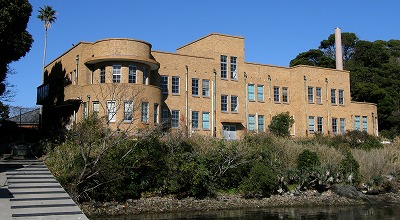
現在、外来利用の実習・研究施設となる研究教育棟を新設工事中であり、同時に日本海洋生物学百周年記念館(旧本館)、水族・標本棟を解体中のため、やむを得ず、2020年6月末まで利用の受け入れを中止しております。ご不便、ご迷惑をおかけしており、大変申し訳ございません。
実習・研究利用の受け入れ再開は2020年7月からの予定となっております。
下記の通り、第298回 三崎談話会を開催いたします。今回は、両生類の生物学について、ゲノミクス・インフォマティクスを駆使して先駆けた研究を行っている松波雅俊さん(琉球大)・福井彰雅さん(中央大)をお招きしてご講演頂きます。ご興味のあるかたは是非ご参加下さい。
談話会・懇親会の申込は、三浦(miu@mmbs.s.u-tokyo.ac.jp)または宇田川(世話人 udagawa@mmbs.s.u-tokyo.ac.jp)まで。
同一のゲノム情報をもつにも関わらず、環境の変化に応じて形質が変化する現象は表現型可塑性と呼ばれる。両生類は、脊椎動物の中でも特に多様な表現型可塑性を持つことが知られているが、その分子機構については未だに不明な点が多い。演者は、幼生期に顕著な表現型可塑性を示すことが知られている北海道原産のエゾサンショウウオ(Hynobius retardatus)を用いて、両生類における表現型可塑性の分子基盤の解明を目指して研究を進めてきた。脊椎動物の内分泌系の中枢である脳下垂体を用いたトランスクリプトーム解析により、PTH2, CALCA, PRL1, GH, NPBなどの内分泌関連因子の発現量が可塑性の発現と相関していることが明らかになった。また、分子系統解析の結果、PRL1とCALCAは、それぞれ両生類の祖先系統と有尾両生類の祖先系統で遺伝子重複を起こしている可能性が示唆された。本講演では、これらの結果について報告する。さらに、現在、新規モデル生物であるイベリアトゲイモリ(Pleurodeles waltl)を用いて、ゲノム編集によるこれらの内分泌関連因子の機能検証を進めてるので、その進捗についても紹介する。
The occasional occurrence of annelids with two tails have been recorded both in nature, and, more frequently, in worms in which regeneration has been studied experimentally since the XIX century. These aberrant forms have been considered the result of punctual “mistakes” or induced experiments during the regeneration process; and there are no reports of these animals living further for reproductive activity. However, within Syllinae, two species have been described with a morphology that makes them unique among all so far ~20,000 described annelids: Syllis ramosa McIntosh, 1879 (from Philippines) and Ramisyllis multicaudata Glasby, Schroeder and Aguado, 2012, the so-called Tree syllid worm (from Australia). These animals are the only two branching annelids and they live in strict symbiosis within sponges. They have one “head” but multiple branches; each of them goes into a canal of their host, growing within the sponge by producing new branches and enlarging the existing ones. This body pattern and biology has astonished biologists and the general public since they were first described. The recent studies with R. multicaudata are currently stimulating many lines of research both within and outside of the fields of systematics and development. Other records without proper identification of possible branching syllids have been provided from the Red Sea, New Zealand and Japan. Fortunately, we have recently identified a possible population in Japan. Our recent results in external and internal anatomy, reproduction, symbiotic and feeding behavior as well as phylogenetic relationships and genomic data from R. multicaudata will be summarized herein and future perspectives for the study of branching annelids from Japan will be presented.
Of the staggeringly diverse reproductive strategies of annelids, perhaps none is more interesting than that of syllids (Annelida, Syllidae). During their reproduction, syllids not only undergo epitoky-related morphological changes as those observed in other annelids (e.g. nereidids), but, in some cases, also create independent reproductive unites called stolons. This, creates a uniquely complex life cycle which has been studied by many authors. Several studies during the 80’s and 90’s concluded that the process of stolonization was related to environmental factors such as water temperature and moon cylces, and that there is a male-as-default hormonal regulatory system. However, the physiological and genetic mechanisms behind this process are still largely unknown and only recently there have been new efforts to try to understand this process in more detail. In order to find mechanisms potentially involved in reproductive processes in syllids, we selected female, male, and non-reproducing individuals of Syllis prolifera (Stolonizing) and Nudisyllis pulligera (non-stolonizing) and used them for comparative transcriptomic analyses. For that, we assembled transcriptomes de novo, annotated them, and calculated and compared expression values for each of the assembled transcripts. This comparison allowed us to find that gene expression is altered to a greater extent in males than in females when compared to the non-reproducing individuals, pointing to a sex determination system in which negative regulation of gene expression might be playing an important role. Finally, we also used this data to find sex-specific changes in Gene Ontology categories not previously known to play a role in syllid reproduction.
下記の通り、第296回 三崎談話会を開催いたします。今回は、深海のメイオベントスについて(嶋永元裕さん)、恒常性に関わるシグナル経路について(日笠弘基さん)、再生医療について(伊藤弓弦さん)、それぞれ先駆的な研究を展開されいているお三方をお招きしてご講演頂きます。ご興味のあるかたは是非ご参加下さい。談話会・懇親会の申込は、三浦(miu@mmbs.s.u-tokyo.ac.jp)または宇田川(世話人 udagawa@mmbs.s.u-tokyo.ac.jp)まで。
深海底熱水噴出域(熱水域)には、熱水に含有される硫化水素などの還元物質を元に有機物を生成する化学合成独立栄養微生物を摂食、あるいはそれらを細胞内に共生させて栄養を得る熱水域固有の大型底生動物が生息する。これらの熱水固有の大型動物では、高温にさらされるが化学合成細菌による一次生産が盛んな熱水噴出直近部から周辺部へ向かっての環境勾配に沿った棲み分けが知られている。一方、1 mm以下の底生動物であるメイオベントスは、深海において数量共に大型底生動物を凌駕するにもかかわらず、熱水域周辺の生態学的・系統分類学的知見が未だ乏しい状態である。特に日本近海を含む北西太平洋域は、久しく熱水域メイオベントス研究の空白地帯であった。我々は、伊豆諸島海域の火山フロントに並ぶ海底火山のうち、20–30 kmで互いに近接し、熱水域生物群集の比較がしやすい明神海丘、明神礁カルデラ、ベヨネース海丘を調査地域として選び、2012年以降の複数の海洋調査を経て、各海山カルデラ内の複数の熱水噴出孔(チムニー)表面からのメイオベントスサンプル採集に初めて成功した。このようにして得られたサンプルの中から、日本近海では初となる新種の熱水域固有のカイアシ類を発見、本種発見に貢献した(元)学生にちなみ「スティギオポンティウス・セノクチアエ」と命名し、昨年春記載発表した。談話会では、新種のカイアシ類を含むメイオベントスのチムニー表面における群集構造の空間変異や、分類群間の栄養炭素源の差異(食い分け)の可能性について、秘蔵の画像・映像を交えて紹介する予定である。
下記の通り、第295回 三崎談話会を開催いたします。
今回は、進化生物学、昆虫学、微生物学を中心に精力的な研究を展開されている深津武馬さんに、生物間共生の多様性および進化生態学的な重要性の理解の最前線についてご講演頂きます。
ご興味のあるかたは是非ご参加下さい。
談話会・懇親会の申込は
三浦 (miu at mmbs.s.u-tokyo.ac.jp) または宇田川(世話人:udagawa at mmbs.s.u-tokyo.ac.jp) まで。
日時:2019年9月2日(月) 17時00分~
場所:東京大学大学院理学系研究科・附属臨海実験所・セミナー室
講演者:深津武馬(産業技術総合研究所・生物プロセス研究部門・首席研究員)
親睦会: 18時30分~ (会場:未定)
演題:「共生・進化・生物多様性」
深津武馬(産業技術総合研究所・生物プロセス研究部門・首席研究員)
要旨:
自然界では、生物は周囲の物理的な環境はもちろんのこと、他のさまざまな生物とも密接なかかわりをもって生きています。すなわち、個々の生物は生態系の一部を構成している一方で、体内に存在する多様な生物群集を含めると、個々の生物がそれぞれに生態系を構築しているという見方も可能です。非常に多くの生物が、恒常的もしくは半恒常的に他の生物(ほとんどの場合は微生物)を体内にすまわせています。このような現象を「内部共生」といい、これ以上にない空間的な近接性で成立する共生関係のため、きわめて高度な相互作用や依存関係がみられます。このような関係から、しばしば新規な生物機能が創出されます。共生微生物と宿主生物がほとんど一体化して、あたかも1つの生物のような複合体を構築することも少なくありません。共⽣関係からどのような新しい⽣物機能や現象があらわれるのか?共⽣することにより,いかにして異なる⽣物のゲノムや機能が統合されて1つの⽣命システムを構築するまでに⾄るのか?共に⽣きることの意義と代償はどのようなものか?個と個、⾃⼰と⾮⾃⼰が融け合うときになにが起こるのか?今回は特に昆虫類と微生物の共生関係に焦点をあて、生物間共生の多様性および進化生態学的な重要性の理解の最前線について、私たちの研究成果を中心に紹介します。
Please refer to the application guideline for the 2022 Education-Related Joint Usage.
Applications for research use by faculty and researchers are accepted at any time.
Please inquire at the office for availability and submit an application form.(Form 1)
For first-time users, please submit an “Application for Use”( (Form 3) )at least two weeks prior to the desired date of use, as the Steering Committee will review the application. This application form must be submitted when the content of the joint use changes, even if the user is the same. In the case of multi-year use, an application form must be submitted for each fiscal year.
For inquiries, please contact:
Misaki Marine Biological Station (MMBS) The University of Tokyo
TEL: 046-881-4105
E-mail1: office@mmbs.s.u-tokyo.ac.jp (office)
(misaki@mmbs.s.u-tokyo.ac.jp was discontinued due to a server change.)